The Click You Can Trust: EV Charging, VR Controllers and the Art of a Convincing Connection
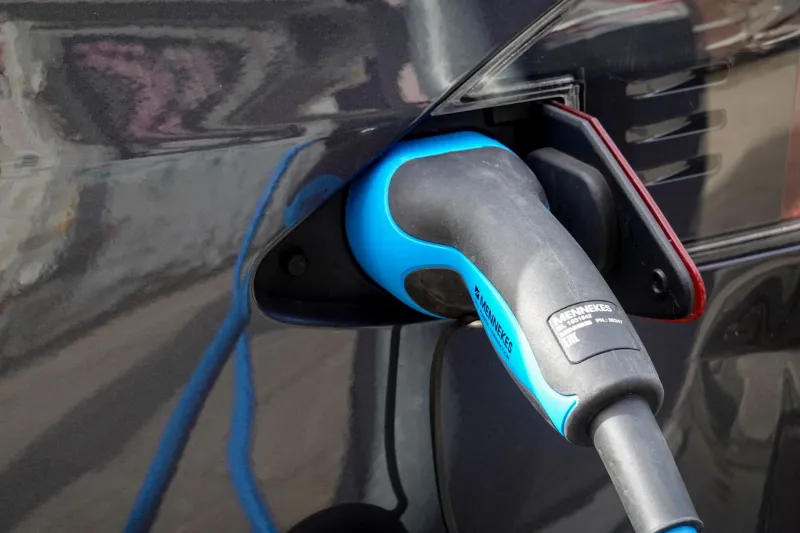
There is a particular kind of optimism in lifting a public EV charging cable on a wet Tuesday at a motorway service station. The cable is heavier than you expect, stiff with cold, and it drags against its holster like it has opinions. You lift the connector, line it up, push. For half a second nothing happens. Then the latch gives, the plug seats, and there is a clunk — not a dramatic one, more the sound of a sturdy cupboard closing — that tells your hand the job is done.
That clunk matters. It matters because everything after it is uncertainty. The charger’s screen may say “connecting”. The app may say “preparing”. The car may say nothing at all. Somewhere in the cloud, a payment authorisation is having a quiet think. And you are standing there in the drizzle, wondering whether to tug the cable, check the app again, or pretend you meant to stand in this exact spot for five minutes.
Good haptic design lives in that gap. So does bad haptic design.
The physical grammar of a charging stop
EV charging has developed its own small physical language. The weight of the cable tells you it is built for outdoors, not for a desk. The latch resistance tells you the connector is not going to fall out halfway through a motorway journey. The final seat — that short, solid travel before the clunk — tells you the mechanical parts have agreed with each other. Even the rubber flap on the car’s charging port has a role: it clicks back, it hangs, it lets you know it has been moved.
None of this is glamorous. That is exactly why it is useful. A charging stop is a low-attention interaction: you are tired, maybe cold, probably thinking about the next junction. You do not want to read a manual. You want the hardware to tell you, through your hand, that something has happened.
Then comes the app delay, which is the modern equivalent of waiting for a shop assistant to check out the back. The physical connection is already certain. The digital confirmation is not. The result is a strange split in trust: your hand believes the cable, but your brain keeps checking the screen.
VR has the same gap, just with fewer puddles
VR controllers and interactive systems have a version of this problem. We are often very good at showing connection states. A controller appears in the headset. A virtual hand grips an object. A menu confirms that a device is paired. A progress spinner does its little dance. But showing is not the same as feeling, and confirming is not the same as convincing.
When a VR controller seats into a virtual socket, the user should feel a distinct arrival: a short resistance, a small release, a crisp stop. When a hand grabs a virtual tool, the haptic pulse should not be a generic buzz that could mean anything. It should say “held”, not “something happened nearby”. When a system loses tracking or drops a connection, the feedback should feel like a latch slipping, not like a notification appearing in the corner of the eye.
This is where the EV charger is a useful teacher. It does not rely on a single channel. The cable has weight. The latch has resistance. The connector has a clunk. The car may flash a light. The charger may show a message. The app may eventually catch up. The physical layer carries the first and most important message: you are connected.
Confidence is a sequence, not a tick
A trustworthy haptic connection is not one buzz. It is a sequence. First, alignment: you feel that the thing is in the right place. Then, resistance: you feel that it is being accepted. Then, seat: you feel that it has arrived. Finally, release: the system stops fighting you and lets you move on.
That sequence is easy to fake badly. A single vibration at the end of a gesture is like an app saying “done” before the payment has cleared. It may be technically true, but it does not feel true. In VR, that gap shows up as users tugging at virtual objects, repeating gestures, or losing confidence in the controller itself. In public EV charging, it shows up as people unplugging and replugging a cable that was working perfectly well.
The lesson is not that VR needs more haptics. It is that VR needs better-shaped haptics: feedback that follows the physical logic of the interaction rather than decorating it. A latch should feel like a latch. A seat should feel like a seat. A release should feel like permission.
Designing for the hand first
For UK designers, there is a practical takeaway here. Public infrastructure is a masterclass in low-patience interaction. People approach a chargepoint with a wet hand, a cold phone, and a mild suspicion that the machine is not on their side. The ones that work best do not overwhelm you with information. They give you a physical yes, then a digital one.
Haptic VR should aim for the same order of operations. Let the hand know first. Let the screen confirm second. If the digital layer is slow, the physical layer should still be honest. That means thinking about weight, resistance, travel, and stop — the same vocabulary a charging connector uses — rather than treating haptics as a finishing touch.
A good charging cable does not just connect a car to a charger. It briefly connects a person to a system they did not build and cannot see inside. The clunk is a small contract: something has happened, and you can trust it. VR could use more contracts like that. Fewer spinners, fewer ticks, fewer maybe-buzzes. More clicks that mean exactly what they say.