Twelve Degrees and Drizzling: Haptic Design Lessons from a British Winter
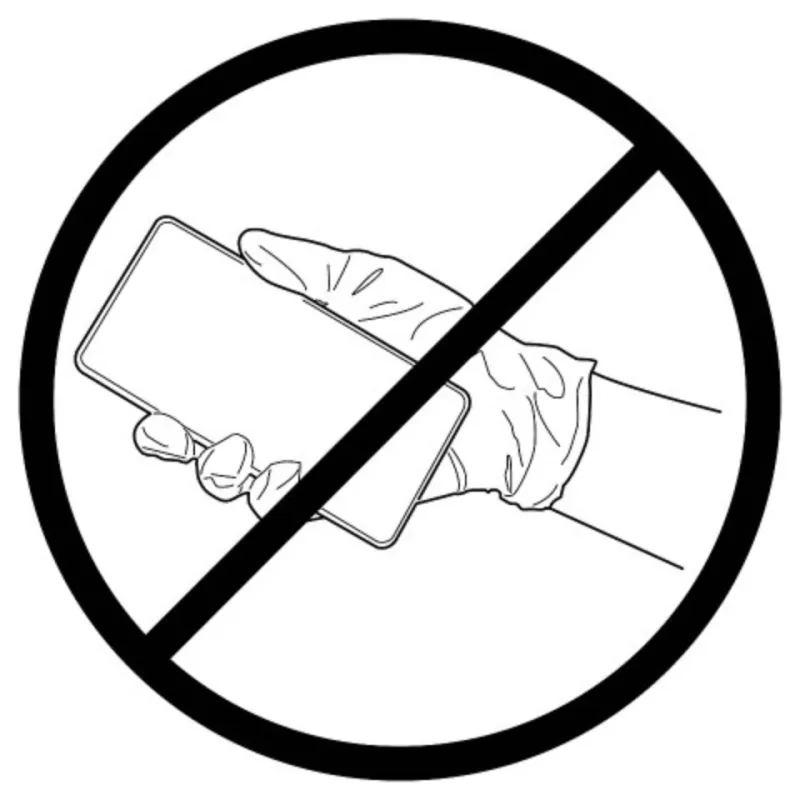
Photo: Ljgdsaa78900, CC BY 4.0, via Wikimedia Commons
There's a particular Saturday in November that every outdoor immersive producer in Britain knows. It's four degrees, the drizzle is somewhere between mist and rain, the queue is forty minutes deep, and the first ten people through the gate are wearing gloves. By the time they reach your haptic installation, their hands are cold, slightly damp, and about as sensitive as a wooden spoon.
This is the environment most haptic demos are never tested in. Studios tune their kit in a warm room with bare hands, then ship it to a light trail in a country park in December and wonder why nobody notices the beautiful 200 Hz texture they spent three weeks building.
I've spent the last few winters watching this play out — at illuminated trails, at winter pop-ups, at outdoor VR tents where the condensation inside the headset is visible from outside. Here's what actually holds up, and what the design brief should say before anyone books a laser cutter.
The lab is 21°C and that's the first problem
Most haptic evaluation happens at room temperature, with dry skin and no gloves, on a device that was charged an hour ago. Every one of those variables is wrong for a British winter.
Cold skin is the big one. Tactile sensitivity drops noticeably as finger temperature falls — not dramatically, but enough that thresholds you carefully calibrated become marginal. Vibration that felt crisp in the studio reads as a vague fuzz outdoors. Fine textures vanish entirely. Then gloves arrive and remove another layer of the signal.
Add moisture and the picture muddies further. Damp skin changes friction, which changes how a surface feels under a sliding finger. Condensation inside an enclosure can damp a resonant actuator or short a contact. And cold pulls battery capacity down, so the device that ran for six hours in July might manage four in February.
None of this is exotic. It's just unglamorous, and unglamorous things get skipped when a project is three weeks from opening night.
What cold hands actually lose
Two things, mainly: high-frequency detail and the ability to feel anything through fabric.
Vibrotactile perception is strongest in the couple of hundred hertz region, but gloves act as a low-pass filter — they soak up the fast stuff and let the slower, chunkier movement through. So a design that leans on crisp, high-frequency buzz is fighting the glove. A design that leans on a broader, lower-frequency pulse with a bigger contact area has a much better chance. Larger actuators, more contact patch, more mass moving: unsubtle, effective.
Grip is the other loss. Cold hands are clumsier hands, and gloves make every pinch less precise. Any interaction that needs a fingertip squeeze, a pincer grip or a delicate slide is now a coin toss. The users who struggle most — older visitors, anyone with arthritis or Raynaud's, anyone who's been standing in a queue for half an hour — are exactly the people a winter event should be easiest for.
Field notes from a wet Saturday
The kit that survived, roughly in order of stubbornness:
Big, chunky, low-frequency actuators. Anything with a decent moving mass and a wide contact area kept working through gloves and cold. Small coin motors buried under a thin shell did not.
Silicone over foam. Foam padding holds water like a sponge and goes cold and clammy within twenty minutes. Silicone and closed-cell surfaces wipe down, stay grippy when wet and don't turn into a hand-shaped puddle.
Sealed enclosures with proper gaskets. Condensation kills more outdoor haptic kit than rain does, because rain is obvious and condensation is not. Anything that gets cycled between a warm tent and a cold field will collect water inside unless it's designed not to.
Physical, tactile landmarks. The installations that worked best weren't the ones with the strongest buzz — they were the ones where you could find the touchpoint by feel. A raised ring, a groove, a change of texture. When fingers are numb, shape beats vibration every time.
Generous, obvious feedback. Subtle confirmation was invisible outdoors. What read as "nicely understated" in the studio read as "broken" in the rain.
Gloves, grip and the moisture problem
Capacitive touch and gloves have never got on, and winter events tend to solve it badly — either by asking people to remove gloves (they won't, and shouldn't) or by cranking sensitivity until the surface triggers on a raindrop.
The better answer is to stop requiring bare-skin contact for anything essential. Physical switches, pressure-based pads, large conductive targets you can hit with a knuckle or a sleeve. If a control must be capacitive, make it big, make it findable, and test it with the thickest gloves you can borrow from a friend who works outdoors.
On grip: assume the hand is wet and slightly weak. Reduce pinch forces, increase target sizes, and provide somewhere to rest the hand. A haptic handle that requires a firm closed grip for two minutes is an endurance test in gloves, not an experience.
Designing for numbness instead of around it
The instinct when you discover that users can't feel your fine detail is to crank the amplitude. That works up to a point, then it just becomes a dull rumble that everyone learns to ignore.
A better move is redundancy. Pair every haptic cue with something the user can perceive through another channel — a change in resistance, a click, a sound, a light that confirms the state rather than the touch. The haptic layer then does what it's genuinely good at outdoors: giving a sense of mass, impact and boundary that survives gloves.
And build in the assumption that some users will feel almost nothing. If the experience collapses without the buzz, it was never really a haptic experience — it was a vibration demo with a queue outside.
A winter spec sheet
If I were writing the brief for any outdoor haptic build in the UK, it would have four lines at the top.
Test outdoors in January, not indoors in October. Recruit testers with cold hands, gloves and low grip strength, and test at the end of a queue rather than the start. Treat numbness, grip and moisture as first-order design constraints, not as QA issues to be noted after the build. And design the fallback first — the version that works when the actuator is cold, the battery is tired and the user can't feel a thing.
British winters are, in the end, a fairly brutal usability lab. Get it working in a wet field in February and it will work anywhere. Get it working only in the studio and you've built something for the eleven people who came on a warm day.